

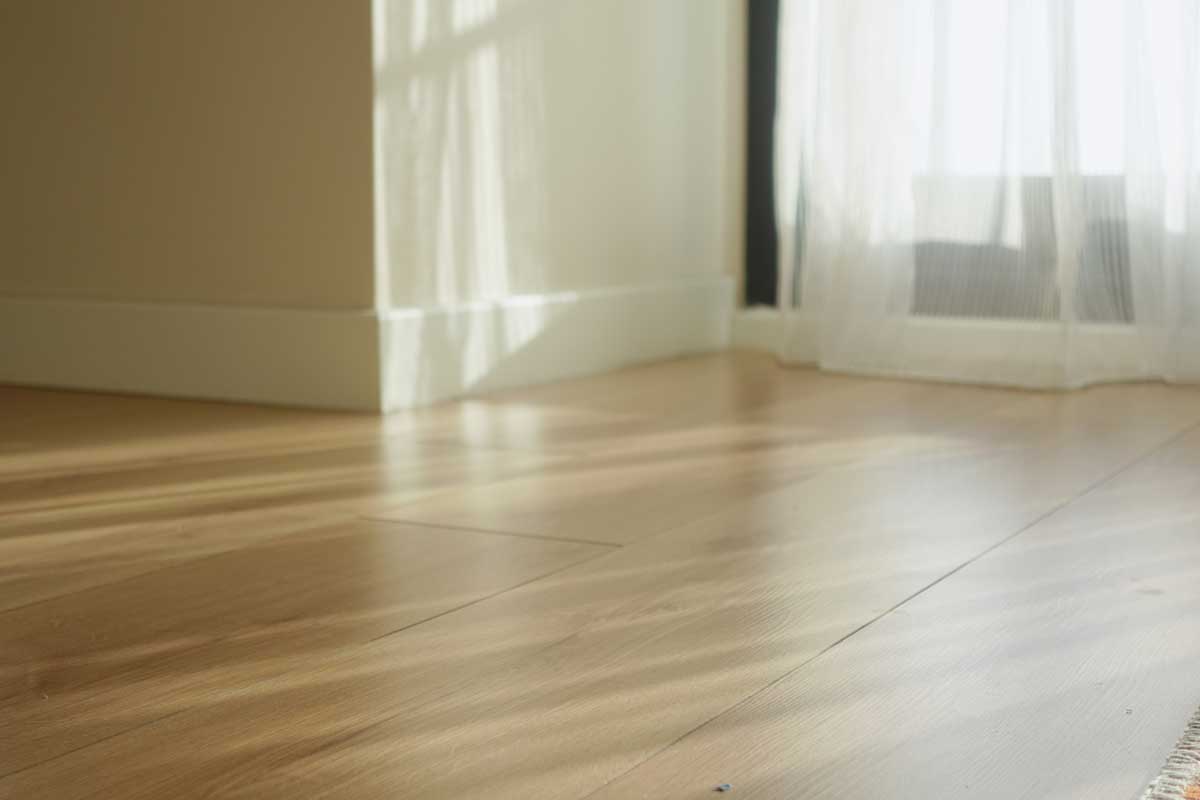
Can Hardwood Be Installed On Concrete? Installation Methods Explained
Many homeowners assume hardwood flooring can only be installed over a traditional wood subfloor. Because of that, concrete slabs, especially in basements, condos, and slab-on-grade homes, are often seen as a limitation rather than a starting point.
In reality, hardwood can be installed over concrete in many residential settings. The determining factor isn’t whether it’s possible, but whether the slab conditions, product selection, and installation method are properly aligned.
Concrete behaves very differently from wood. It carries moisture in ways that aren’t always visible, responds differently to seasonal change, and requires more preparation before flooring can be installed successfully on top of it. When those conditions are properly managed, hardwood over concrete can perform reliably for years.
For homeowners considering an install hardwood over concrete Minnesota project, understanding how the system actually works is essential before moving forward.
Hardwood Installation Over Concrete Is Common in Modern Homes
Hardwood over concrete is no longer an exception. It’s a standard installation scenario in many home types. It is commonly found in:
- Basement living spaces
- Condominiums and townhomes
- Slab-on-grade homes
- Home additions and remodels
- Lower-level family rooms and offices
The key distinction is that concrete requires a different installation system than wood subfloors. With the right preparation and materials, hardwood can perform very well in these environments.
Why Does Concrete Require a Different Installation Approach?
Concrete is often perceived as a stable, sealed surface, but in practice it is porous and dynamic.
Even after full curing, concrete can:
- Release moisture vapor from below the slab
- Absorb and transmit ambient humidity
- Retain residual construction moisture
- Shift subtly with temperature and seasonal change
Hardwood flooring is naturally responsive to moisture. It expands and contracts based on environmental conditions. When that movement is combined with moisture migration from below the slab, the flooring system must be designed to manage both factors.
If it is not, issues may develop over time, including:
- Board cupping or edge lift
- Seasonal gapping between planks
- Adhesive breakdown in glue-down systems
- Surface distortion or uneven wear patterns
- Premature finish degradation
This is why concrete slab hardwood installation requires a controlled system rather than a standard installation approach.
How Does Hardwood Get Installed Over Concrete?
Moisture Testing Is the First Critical Step
Before any installation begins, the concrete slab must be evaluated for moisture conditions.
This step is essential in determining:
- Whether the slab is suitable for hardwood installation
- Whether moisture mitigation is required
- The level of risk for future movement or failure
- What installation system is appropriate
Moisture testing identifies both surface and subsurface conditions that are not visible during a standard inspection.
Even slabs that appear completely dry can still release moisture vapor at levels that affect flooring performance over time.
Skipping this step is one of the leading causes of hardwood installation issues over concrete.
Vapor Barriers Provide Long-Term Protection
Once moisture conditions are understood, vapor control becomes the next priority. A vapor barrier system is designed to limit moisture transfer from the slab into the flooring assembly.
Depending on the application, this may include:
- Moisture-resistant adhesive systems
- Sheet membrane vapor barriers
- Liquid-applied moisture control products
- Engineered underlayments designed for concrete use
While these materials are not visible after installation, they play a critical role in maintaining floor stability over time.
Floating vs Glue-Down Installation Systems
Two primary installation methods are used when installing hardwood over concrete: floating and glue-down systems.
Floating Installation Systems
Floating floors are not mechanically attached to the concrete slab. Instead, the flooring planks lock together and rest over a moisture-resistant underlayment.
This system offers:
- Reduced sensitivity to minor slab imperfections
- Faster installation timelines
- Easier future repair or replacement
- Compatibility with many engineered hardwood products
Floating systems are often used in basements and areas where moisture conditions or subfloor variability require additional flexibility.
Glue-Down Installation Systems
Glue-down installations bond the hardwood directly to the concrete using specialized adhesives designed for slab applications.
This method provides:
- A solid, stable feel underfoot
- Reduced movement within the flooring system
- Strong long-term performance when properly installed
- A seamless finished appearance
However, glue-down systems depend heavily on slab preparation and moisture control. Any deficiencies in the substrate can affect long-term performance.
Both methods are valid when applied in the appropriate conditions. The correct choice depends on slab quality, environmental conditions, and flooring type.
Product Selection Plays a Major Role
Not all hardwood products are suitable for installation over concrete.
Engineered hardwood is typically preferred because it is constructed in layers that provide greater dimensional stability. This reduces movement caused by humidity and temperature changes.
Solid hardwood is more sensitive to environmental variation and generally requires more controlled subfloor conditions. In some cases, it may still be used, but it is less common in slab applications.
Selecting the appropriate flooring material is just as important as selecting the installation method.
Acclimation Is a Required Step, Not an Optional One
Before installation, hardwood flooring must acclimate to the home environment.
This process allows the material to adjust to:
- Indoor temperature conditions
- Relative humidity levels
- Seasonal environmental factors
Proper acclimation reduces the risk of post-installation movement such as expansion, contraction, or gapping.
In Minnesota’s climate, where seasonal humidity changes are significant, acclimation plays an important role in long-term floor stability.
Subfloor Preparation Ensures Installation Success
Concrete slabs must be properly prepared before hardwood installation begins. Depending on the condition of the slab, preparation may include:
- Repairing surface cracks or imperfections
- Leveling uneven areas
- Removing debris, coatings, or contaminants
- Grinding high or uneven spots
- Addressing moisture-related concerns
A properly prepared slab provides a stable foundation for the flooring system. Without this step, even high-quality materials can underperform.
Schedule a Free Feasibility Check With Dave’s Floor Sanding
If you are considering hardwood flooring over a concrete slab, the first step is understanding whether your home is a good candidate for installation.
A professional feasibility check will assess slab conditions, moisture levels, and installation options to determine the best path forward.
Contact Dave’s Floor Sanding to schedule a free feasibility check and receive a professional recommendation for your hardwood flooring project.